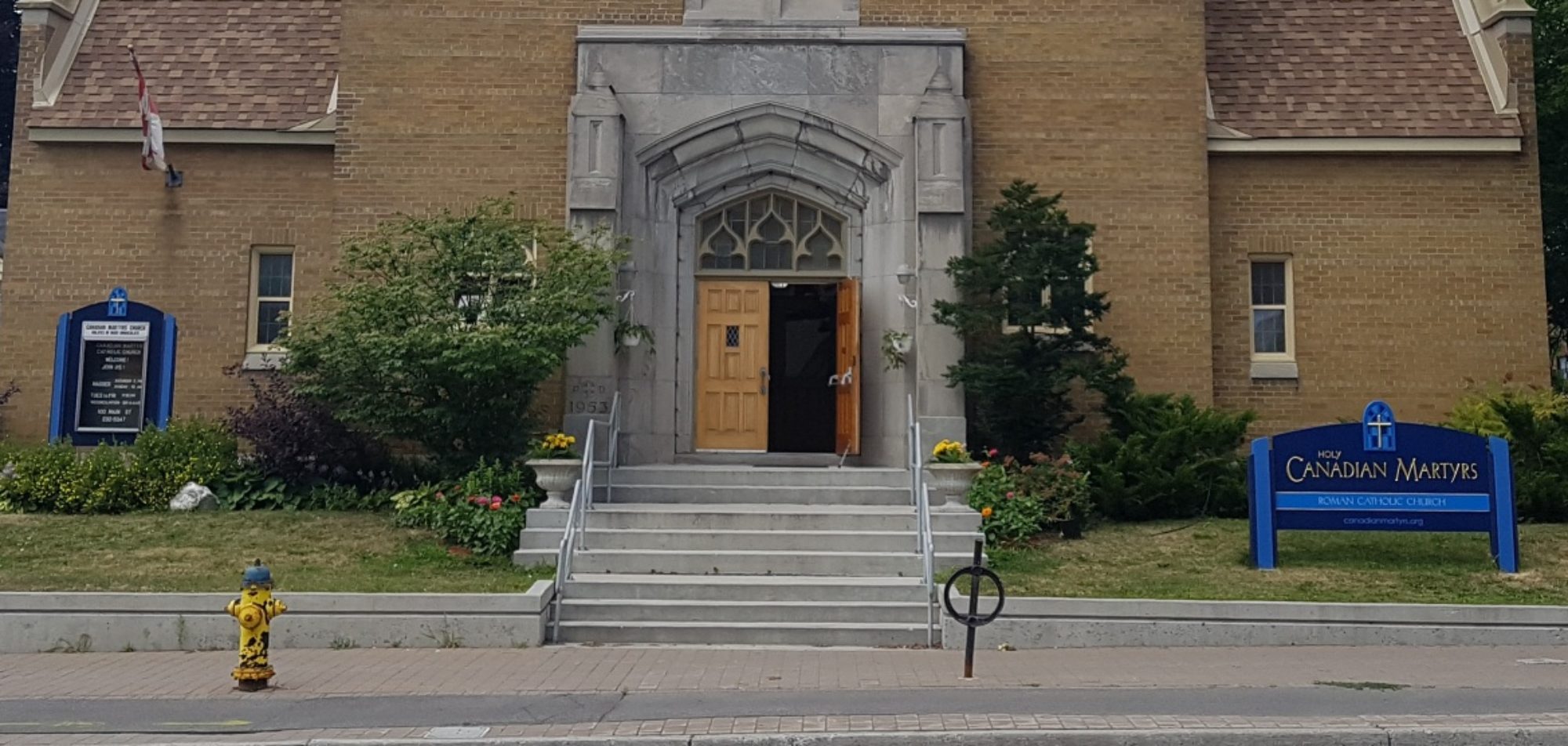
Truth and Reconciliation Committee
The past year has seen a necessary and difficult national refocusing on truth and reconciliation following the discovery of unmarked graves at former Oblate-run residential school sites across Canada. The formation of a Truth and Reconciliation Committee at Canadian Martyrs reflects the concern and grief expressed by some parishioners and a focal point for action by our parish.
About
The discovery of unmarked graves at former Oblate-run residential school sites across Canada became a call to action for several members of Canadian Martyrs Parish.
• June 2021: The first informal meeting was convened to share feelings and reactions and to discuss possible next steps.
• August 2021: Pastoral Council approved a small working group to make recommendations.
• October 14, 2021: Pastoral Council voted to form a Truth and Reconciliation Committee.
• December 1, 2021: The committee held its first meeting.
The committee meets regularly to develop options and recommendations to advance truth and reconciliation in our parish and the broader community.
Mandate
The committee’s mandate was approved by Pastoral Council on October 14, 2021. It is focused on four main workstreams:
• communications with the parish and our community
• work with parish ministries and committees to embrace truth and reconciliation in all we do
• education led/guided by Indigenous peoples and residential school survivors
• engagement with the Oblate leadership toward greater transparency and accountability to residential school survivors
Engagement
• Oblate leadership: Engaging with the Oblate leadership was the committee’s starting point. On December 20, 2021, the committee sent a letter to Fr. Ken Thorson, Provincial Superior of OMI Lacombe Canada, to share concerns and invite him to meet with committee members. The committee met with Fr. Thorson and Fr. Richard Beaudette, Vicar Provincial of OMI Lacombe, on April 6, 2022; the committee’s overarching request to Fr. Thorson was for the Oblate leadership to better and more meaningfully engage and communicate with the laity in Oblate parishes across Canada so we can all better understand the work that has taken place and what is left to do.
• Kateri Native Ministry: Donna Naughton, executive director of Kateri Native Ministry, joined one of the committee’s online meetings as a resource person; committee members consult her periodically as needed.
• Truth & Reconciliation Network: A member of the committee is part of this network of five Ottawa-area parishes that are actively engaged in reconciliation.
Growing Our Understanding
The ongoing journey toward full truth and reconciliation will be long and, at times, very painful. Within our parish, we have barely begun this important work. One entry point is through our parish study group, using the dialogue guide, Listening to Indigenous Voices, by the Jesuit Forum for Social Faith and Justice.
Get Involved
The Canadian Martyrs’ Truth and Reconciliation Committee is committed to this parish journey. We will continue to provide updates on our work, and we welcome your feedback and participation going forward. If you have any questions, please contact us via the contact form on this website or through the parish office.
Activities
Prayer and liturgy
• July 2022: Parish prayer service marking the start of Pope Francis’ arrival in Canada for his “penitential pilgrimage.”
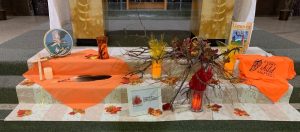
• September 2022: Three themed weekend liturgies leading up to National Day for Truth and Reconciliation on September 30:
– September 10/11: Listening to Indigenous Voices
– September 17/18: Learning with Open Hearts
– September 24/25: Walking Together on the Path of Reconciliation
Presence in the community
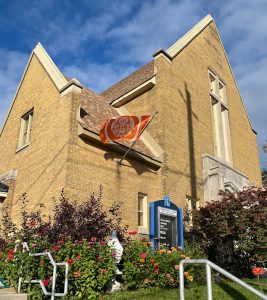
• Flying the Survivors’ Flag outside the church as a sign of solidarity with survivors and their families
• Tying orange ribbons to the railings of the Main Street entrance and at the parking lot entrance the weekend before National Day for Truth and Reconciliation as a reminder of children sent to residential schools; handing out orange ribbons to parishioners after Mass to take home
• Writing articles for The Mainstreeter community newspaper
October 2022: Janice Cameron-Caluori, “Reconciliation with Our Indigenous Peoples” (p. 9); Fr. Tim Coonen, OMI, “Signs and Symptoms: Reflections on the Survivors’ Flag” (p. 16)
• Kairos Blanket Exercise, facilitated by Kateri Native Ministry at Immaculata High School (November 2022)
Parish resources
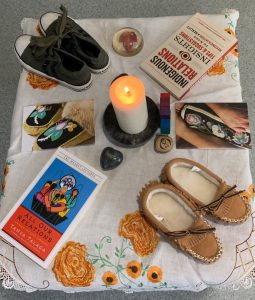
• Truth & Reconciliation table at the back of the church as a place to share information and engage in conversation with parishioners
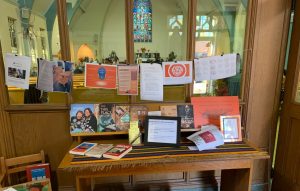
• Ongoing group study sessions using the Jesuit Forum resource, Listening to Indigenous Voices (contact the parish office for details)
• Lending library of books by Indigenous authors for parishioners to continue learning
• Writing articles for parish’s newsletter, The Epistle
• Submitting announcements for the weekly bulletin